Also from us · picture books
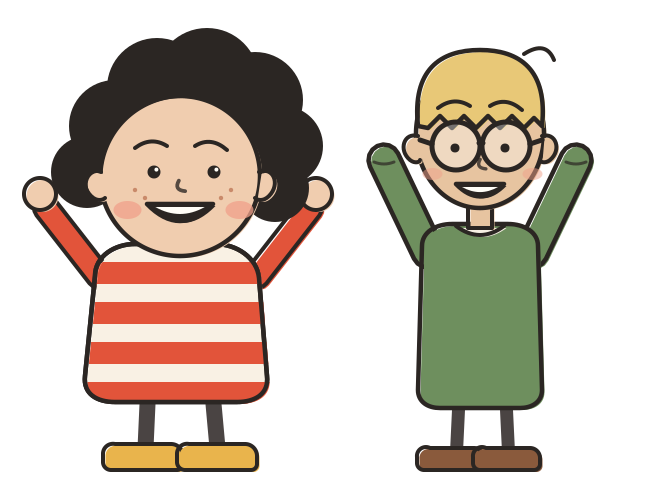
Bob & Otto
Read the book front to back and it is Bob’s story. Turn it over and read the same pages back — same words, same pictures — and it is Otto’s. Five small misunderstandings between two best friends, and how each one comes apart.
Ten stories in five books
Picture books for four- to eight-year-olds, in English and Spanish, about a hundred words each way — short enough for bedtime, twice. Forward you are inside Bob’s head: what he heard, what he decided, why he walked off. Turn the book over and you are inside Otto’s. Nobody was wrong. Nobody asked.
That is the one habit the books practise: before you decide what someone meant, ask how they heard it.
Three things a child notices
- The last page is the first page. Every book opens and closes on the same line, so one boy’s ending is the other’s beginning.
- The sparrow. It sits on every one of Otto’s pages and never on Bob’s, so a child can always tell whose side they are on.
- One question at the end. What did the other boy mean?
Bob, Otto and Anna all read the same backwards. That is not an accident.
The five
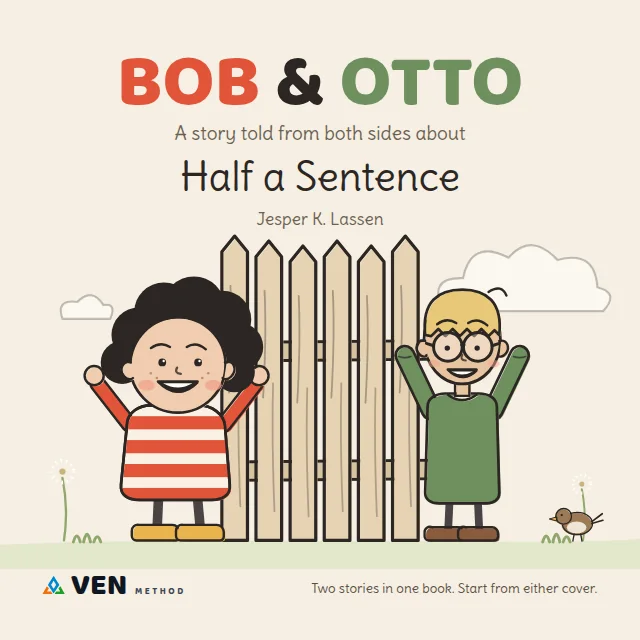
- Half a Sentence · Media frase — Bob hears his best friend through a fence and runs off with the half he heard. ★★★★★ Rated 5 out of 5 on Amazon
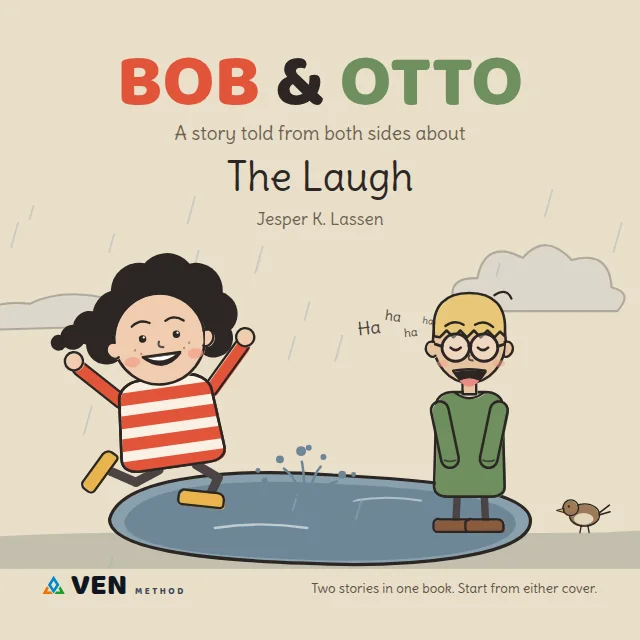
- The Laugh · La risa — One puddle, one jump, one splash — and Bob decides what the laugh meant without asking. ★★★★★ Rated 5 out of 5 on Amazon
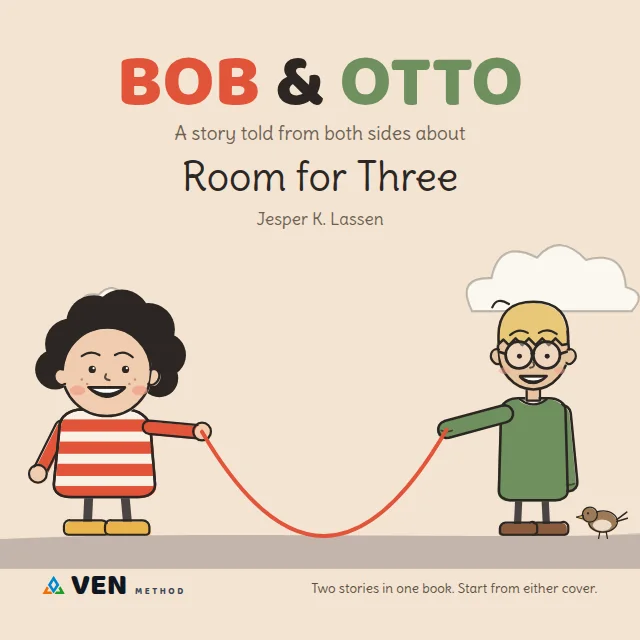
- Room for Three · Sitio para tres — A new girl at school. Bob counts to two and walks to the wall on his own. ★★★★★ Rated 5 out of 5 on Amazon
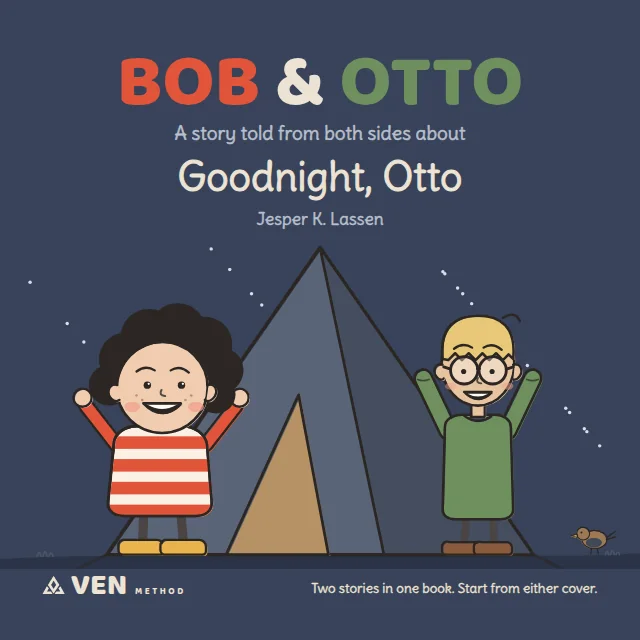
- Goodnight, Otto · Buenas noches, Otto — Two boys in a tent and a silence each of them reads as an answer. ★★★★★ Rated 5 out of 5 on Amazon
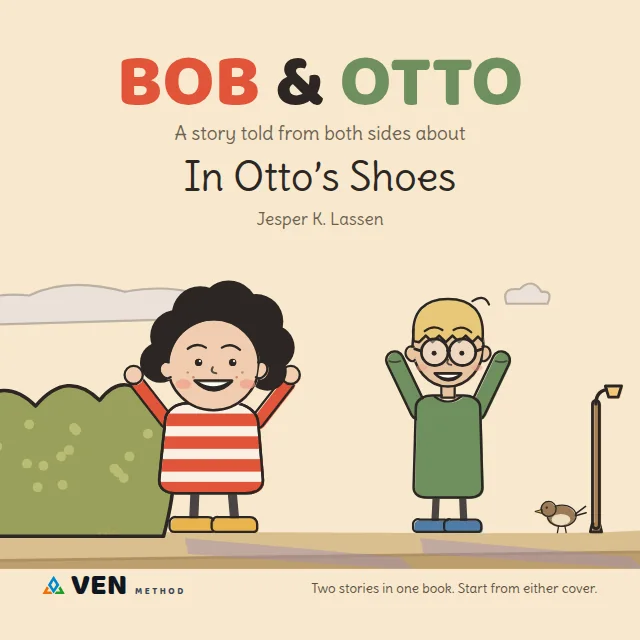
- In Otto’s Shoes · En los zapatos de Otto — Otto’s new shoes hurt and Bob cannot tell why. Halfway home they swap. ★★★★★ Rated 5 out of 5 on Amazon
Paperback $7.99 · 8.5 × 8.5 in · 32–34 pages. Kindle $2.99, in English and Spanish — the Spanish title beside each book is its Kindle edition, and the Spanish paperbacks are still to come. Published 10 September 2026 by VEN Method. Bookshops and libraries order the paperbacks through Ingram by ISBN. Every edition and every shop, on one page · class sets and bulk orders.
What reviewers have said
“You’re seeing both sides of the story figuratively, while reading it from both sides of the book literally.”
Deb Preston · Children’s Book Review, 24 September 2026
“…a thought-provoking, discussion-inducing series that kids and adults alike are sure to enjoy.”
Deb Preston · Children’s Book Review
A 2:16 video review of the series.
Michelle Marcotte · Great Books for Kids, YouTube, 3 October 2026
Each of the five books is rated 5 out of 5 on Amazon. Each rating button above goes to the listing it came from.
The form has a name
The text of each book is a reverso, or reverse poem — a form introduced by the poet Marilyn Singer, in which the same lines read in the opposite order say something different. Bob & Otto writes it as a duet between two characters and builds the reversal into the object: Bob’s line sits on every left-hand page and Otto’s on every right, so both boys speak in both readings. Not a word or a punctuation mark changes. Only the order does. How it works, in detail.
Why it is on this site
Same people. VEN Method teaches children to reach each other in a classroom; the books are the same idea for the youngest readers — on paper, with a grown-up. That is the whole connection: no bundle, no licence, and nothing for a school to buy over there.
The books’ own site
bobandotto.com
Read one both ways in the browser, meet the cast, and get The Swing — a whole story on one sheet you print, fold and cut once. English and Spanish, free.
Take the method. Or take the evening back.
The protocol is published in full and costs nothing — run it tomorrow with four coloured cards. The software writes the questions, runs the screen and keeps the record, for $1 per student per month.