Social-emotional learning, inside the lesson you already teach
Get two hours a week back — and a class that knows each other.
The questions arrive written for this week’s topic. You approve them in two minutes. The class runs it on the screen.
Ven is Danish for friend.
The teacher’s laptop on the classroom screen. The two who are up stand at their own desks.
The teacher’s laptop on the classroom screen. The two who are up stand at their own desks.The same session split into stations. No shared board: each table has the round on its own tablet and works at its own pace.The pair is calledThe board names two students. They stand up at their own desks — nobody comes to the front.
The part teachers ask about first
Building an hour with VEN Method is faster than planning one yourself.
Fractions. The Second World War. Photosynthesis. Whatever you are teaching this week.
Connection questions and academic ones on your topic, written for your grade, with the answers. Read them, keep them, change them.
Plug in the laptop and press begin. Nothing to print, nothing to mark, nothing to write up afterwards.
That is where the hours come from. The social-emotional part is not a second lesson to plan, and the academic part is planned for you. Teachers reported 4.3 h/week back with daily use, about two with twice-weekly — self-reported, one pilot.
Rostering
Bring your class list the way you already have it.
CSV and OneRoster work today, or type the names in. The rest are being built, and we will not list one here until it works. Students never get accounts either way.
Evidence
Hours back. And a closer class.
Six weeks at Svenstrup School in Aalborg, Denmark: 800 students, 40 teachers, half the classes running it and half not. Teachers got time back, the rooms that ran it grew closer, and fewer children stayed away.
One Danish school, not randomised, and we ran it — so read it as a signal and check it in your own room. It is published in full, limitations included.
| Six weeks, 800 students | VEN classes | Control |
|---|---|---|
| Class cohesion3.1 → 4.0 on a five-point scale · Cohen’s d = 1.42 | +29% | +3.1% |
| Student engagement3.0 → 3.9 · Cohen’s d = 1.38 | +30% | +3.3% |
| Unexcused absenceunexcused absences, school records | −18% | +2% |
| Teacher time savedself-reported, with daily use | 4.3 h/week | — |
Svenstrup School, Aalborg, Denmark, 21 October – 1 December 2025. 800 students, 40 teachers, controlled, stepped design (two intervention cohorts, two comparison cohorts); classes not randomised. Cohesion and engagement are student self-report on validated five-item scales (α = 0.89 / 0.85); absence is from school records. One pilot, published in full with its limitations: read the study (PDF) · what it does and doesn’t show.
Try it · you are the one who guesses
Your turn. Guess the colour.
Then answer the question — out loud, if you dare. This is exactly what a pair goes through.
The method
Free, in full, forever.
$0 CC BY-SA 4.0
- The whole protocol: the round, the rules, how to write the questions.
- Run it tomorrow with four coloured cards and a printed sheet.
- Adapt it, translate it, teach it. No permission needed.
The software
The hours, and the record.
$1 per student per month
- Questions written for this week’s topic, ready to approve.
- The Stage, the pairing, the languages, the check-out.
- Class cohesion across terms and years — the part you cannot build in an afternoon.
- A separate database per school, CSV or OneRoster rostering, exports whenever you want them.
- A quote, a signed service agreement with a data-privacy clause, and invoicing your office can process.
Before you write
The questions people ask first.
Longer answers for teachers and for school leaders. The method itself is published in full.
How does it actually save time?
You set the subject and this week’s topic. Back come the connection questions and, if you want, academic ones on that topic with the answers. Read them, approve them, run it. Two minutes, no printing, nothing to mark.
Is this extra work on top of my lesson?
No. It runs inside the lesson you already planned — no separate block, no worksheets, no assessment to grade.
What does it cost?
The method is free: The Connection Protocol is published in full under an open licence, and four coloured cards will run it. The software is $1 per student per month, and your school pays for it.
What do students need?
Nothing. No accounts, no app, no device. They watch the classroom screen.
Who writes the questions?
They are drafted before class, and you approve every one — keep it, edit it, swap it, throw it out. Nothing is generated during a live session, and nothing watches a child: no cameras, no microphones, no alerts. Full disclosure on the privacy page.
Where does the data live?
In a separate database for your school. One first name per student and nothing else that identifies a child. Export or delete it whenever you like.
Also from us · picture books
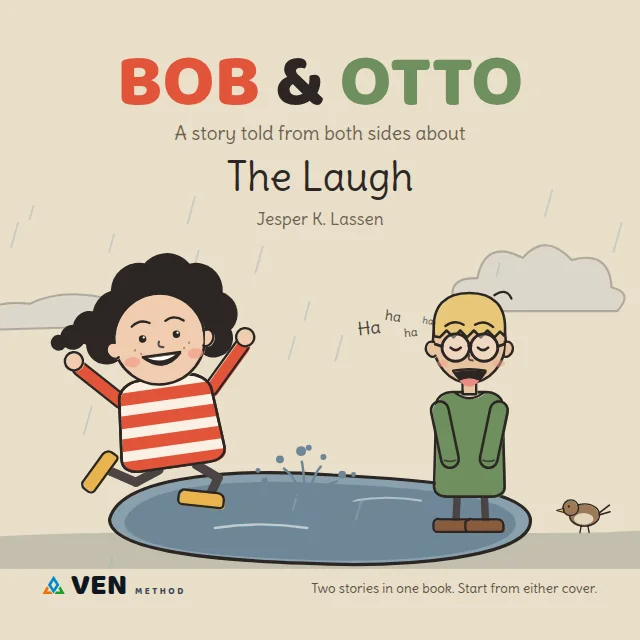
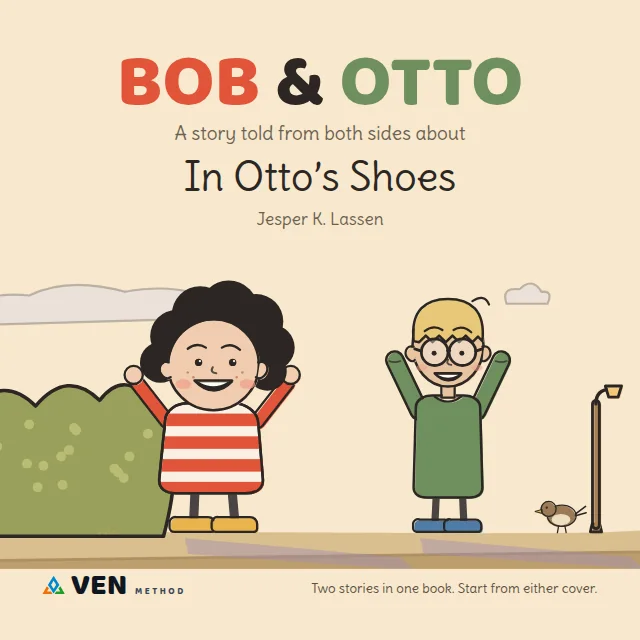
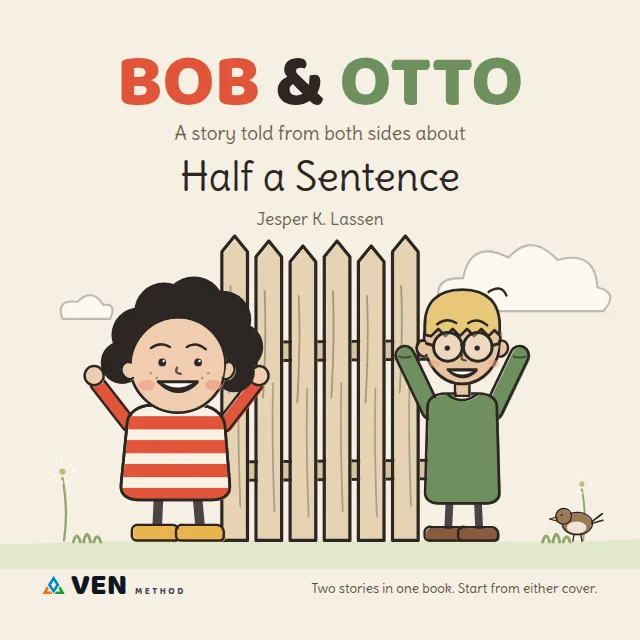
Bob & Otto
Read the book front to back and it is Bob’s story. Turn it over and read the same pages back — same words, same pictures — and it is Otto’s. Five small misunderstandings between two best friends, for ages four to eight, in English and Spanish.
Take the method. Or take the evening back.
The protocol is published in full and costs nothing — run it tomorrow with four coloured cards. The software writes the questions, runs the screen and keeps the record, for $1 per student per month.